
Loading...
Serving Whittier, CA and surrounding areas. (562) 358-3090
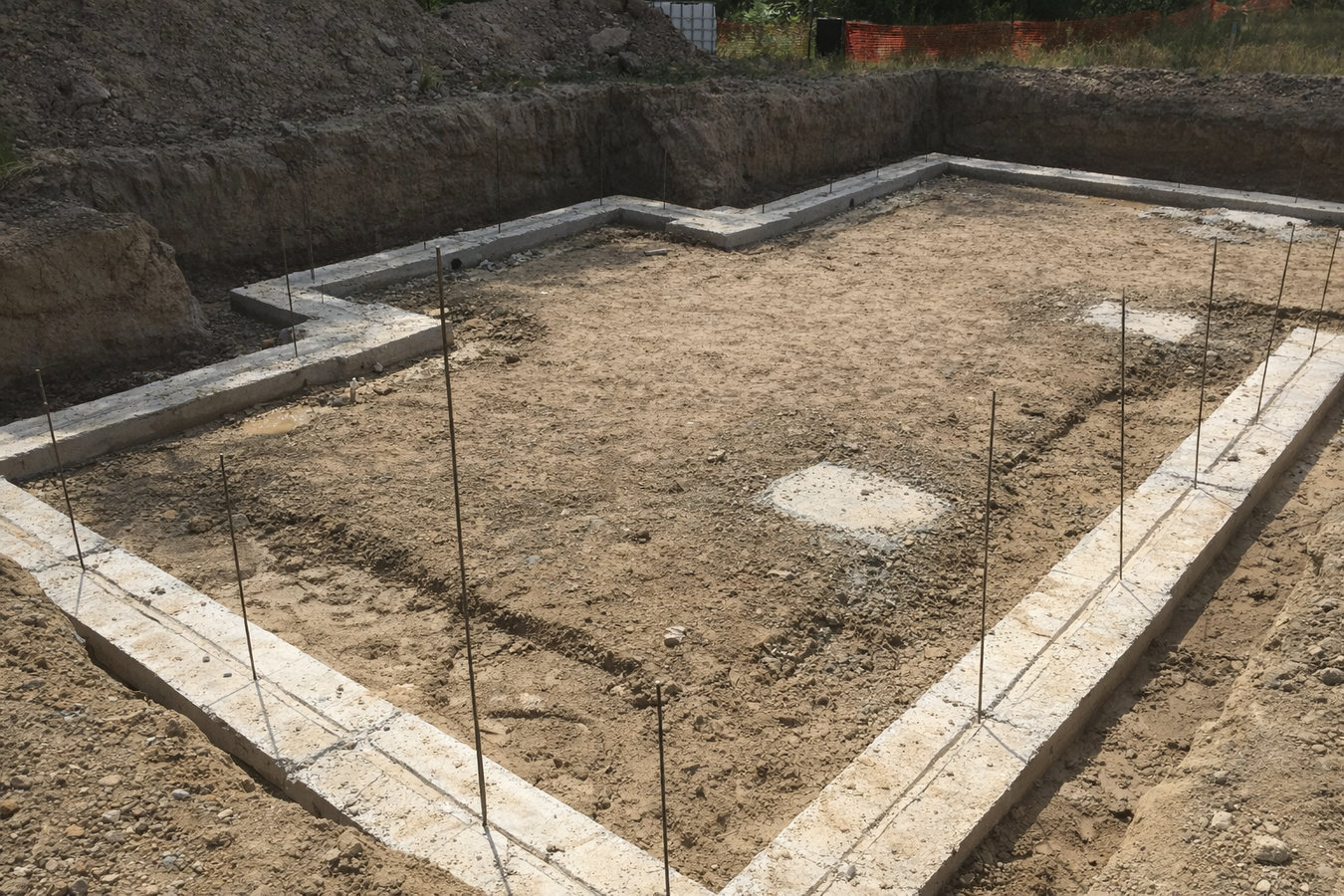
Adding a deck, fence, patio cover, or room addition? We install concrete footings in Whittier designed for local clay soils, seismic conditions, and city permit requirements.
Concrete footings in Whittier anchor fences, decks, patio covers, retaining walls, and room additions into stable ground - most residential footing projects take one to three days of active work, plus a permit approval and inspection period before the concrete is poured.
Many Whittier homes were built before the 1970s, when footing standards were far less demanding than they are today. If you are adding onto an older home or noticing a fence starting to lean or a wall cracking where it did not before, the footing beneath that structure is often the place to start. Getting footings right the first time - properly sized, reinforced, permitted, and inspected - costs far less than repairing what fails above them.
When your project also needs a full foundation system - not just individual footings - our foundation installation service handles that scope and can be coordinated alongside footing work on the same property.
If a wood or metal fence post has started to tilt - even slightly - the footing beneath it has likely shifted, cracked, or deteriorated. In Whittier's clay-heavy soils, this is especially common after a wet winter followed by a dry summer, because the soil movement works against the footing over many cycles. A leaning post is much cheaper to fix than a collapsed panel.
Cracks appearing in a wall, retaining structure, or addition that is only a few years old can indicate that the footings beneath it are moving. In Whittier, this is sometimes traced back to footings that were not sized for local soil conditions or were not inspected before the concrete was poured. If you are seeing cracks that were not there a year ago, it is worth having a contractor look at what is happening below grade.
Any structure attached to your home or built to carry significant weight needs proper footings before construction begins. Starting with footings that are correctly designed, permitted, and inspected costs far less than having to redo them after a structure is built on top - and it protects you if the city ever asks about the permit history.
Retaining walls in Whittier's hillside neighborhoods take on a lot of pressure from the soil behind them, especially after heavy rain. If a wall is visibly moving or cracking at the joints, the footing may no longer be doing its job. This is a safety issue - a failing retaining wall can release a significant amount of soil quickly, and the fix gets more expensive the longer it is left.
We handle everything from the permit application through excavation, steel placement, the city inspection, the pour, and cleanup. For every footing project in Whittier, we schedule the city inspector to review the work before the concrete goes in - that is the step that creates a record and confirms the depth and steel placement are correct. We do not skip this step to save time, because you cannot go back and fix a footing once it is buried.
When footings are part of a larger project - like a foundation raising job on an older home or a retaining wall that needs new footing support - we coordinate the scope so the footing work ties in correctly with whatever is being built above it. We assess older properties carefully before starting, so there are no surprises once the ground is open.
Best for decks, pergolas, patio covers, and fence posts where each load point needs its own anchor into stable ground.
Suits room additions and retaining walls where a connected foundation base needs to distribute load evenly along a line.
For properties where existing footings have shifted, cracked, or are inadequate for a new structure being added above.
Whittier sits in one of Southern California's most seismically active areas. The 1987 Whittier Narrows earthquake caused significant structural damage throughout the city, and the area sits near active fault lines that produce smaller tremors regularly. California's building standards require that footings in this region include steel reinforcement designed to resist the sideways forces that come with ground shaking - which means footings here are legitimately more involved than in many other parts of the country. The California Geological Survey maps the specific hazard zones that affect foundation design across the region, and local contractors should know what those maps mean for your specific property.
Beyond seismic conditions, the clay-heavy soils in the hillside neighborhoods east of Painter Avenue expand and contract with seasonal moisture changes - pushing against footings that were not designed for that movement. We work on footing projects throughout the area, including for homeowners in Pomona and Pasadena, where similar clay soils and seismic conditions shape how every footing project is designed and built.
We respond within 1 business day and schedule a free site visit. Soil conditions and access vary a lot even within the same Whittier neighborhood - an honest quote requires seeing the property.
We look at the dig area, check access, assess the soil, and review any existing foundation work on the property. You receive a written estimate that breaks out labor, materials, and permit fees separately.
We submit the permit application to the City of Whittier Building Division and handle plan check questions. Permit approval typically takes a few business days to two weeks. Work does not begin until the permit is issued.
We dig to the required depth, place the steel reinforcement, and schedule the city inspector before any concrete is poured. After the inspection is approved, the concrete goes in and the crew cleans up. Building above the footings can begin in three to seven days.
Free on-site estimate. We handle the permit, the city inspection, and the cleanup.
(562) 358-3090We schedule the City of Whittier building inspector to review excavation and steel placement before any concrete is poured - on every permitted job, without exception. That inspection creates a record that protects you and confirms the work is correct before it becomes impossible to see.
Whittier sits in one of California's highest seismic risk zones. We size the steel inside every footing for the lateral forces that come with ground shaking in this area - not a generic spec, but the actual reinforcement the local conditions require. The American Concrete Institute standards we follow were developed for exactly this kind of active-zone work.
We serve 12 cities across the Los Angeles basin, and every footing project follows the same permitting, inspection, and reinforcement standard. Property owners who hire us in multiple cities do not get different quality depending on where they are.
A large share of Whittier homes were built before the 1970s under older, less demanding footing standards. When we work on those properties, we tell you what we find before any concrete is poured - not after. If an existing footing is inadequate for what you are building above it, we explain your options in plain language before the project moves forward.
Our footing projects in Whittier are permitted, inspected, and reinforced to the actual requirements of this seismic zone and soil type. That is the only way we work, and it is why the structures built on top of our footings stay in place.
Lifting and releveling older Whittier home foundations that have settled, cracked, or dropped unevenly over decades.
Learn moreFull foundation systems for additions and new construction in Whittier, engineered for local soil and seismic conditions.
Learn moreSpring project season fills quickly - reach out now to get your permit filed and your start date locked in.