
Loading...
Serving Whittier, CA and surrounding areas. (562) 358-3090
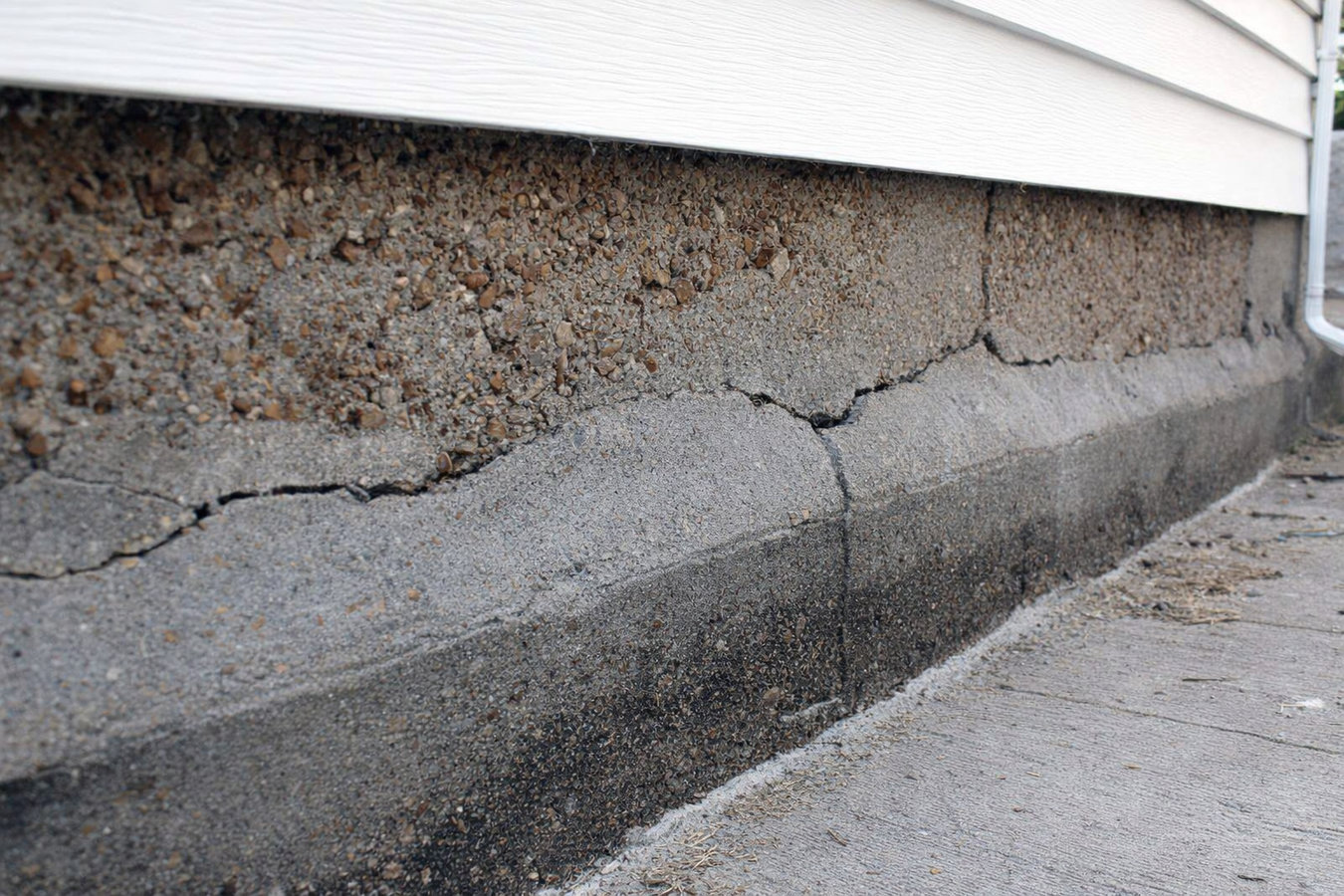
Sunken driveway, uneven patio, or floors that slope where they never did before? We lift settled slabs in Whittier, diagnose the cause, and make sure it does not happen again.
Foundation raising in Whittier lifts a settled or uneven concrete slab back to its original level by pumping material through small drilled holes underneath it - most residential jobs are completed in a single day, often in just a few hours, with no major disruption to your property.
If your driveway dips near the garage door, your patio slopes away from the house, or a section of your garage floor has dropped over the years, the soil underneath has likely shifted. This is especially common in Whittier, where clay-heavy soil expands when wet and shrinks when dry - repeating that cycle year after year until voids open beneath the slab. Foundation raising in Whittier fills those voids and brings the concrete back to level without tearing out the existing slab.
If the settling is more severe or the slab itself is too damaged to lift, our slab foundation building service covers full replacement - and we will give you an honest recommendation on which path makes more sense for your situation after looking at the concrete in person.
When a slab shifts, door frames and window frames shift with it. If a door that used to swing freely now drags on the floor, or a window that opened easily now sticks in its frame, the floor beneath it has likely dropped. This is one of the earliest and most reliable signs that soil movement is happening underneath your home.
Walk along the edges of a room and look where the floor meets the wall. If a gap has opened up - or the baseboard has pulled away from the floor - the slab in that area has settled. In Whittier's older homes, this is especially common in rooms built over fill soil or near the edges of a hillside lot where clay soils compress unevenly.
Stand in the middle of a room and pay attention to whether the floor feels level. A ball placed on the floor will roll toward the low spot. In homes built on Whittier's clay-heavy soils, this kind of gradual slope often develops slowly over years and homeowners sometimes assume it is normal - it is not, and it tends to get worse if left alone.
Whittier's long dry seasons cause clay soil to shrink and pull away from the underside of slabs. If you notice new cracks in your driveway, patio, or garage floor - or if existing cracks have widened - after a dry stretch or a tremor, soil movement is a likely cause. Diagonal cracks radiating from the corners of a slab are a particularly common sign of differential settling.
Every foundation raising job starts with a proper diagnosis - not just lifting the slab and leaving. We assess the soil conditions, check for drainage problems, and look for any signs that a pipe leak or irrigation pattern is driving the settling. If we lift a slab without addressing the root cause, the same problem comes back. That is the difference between a job that lasts a decade and one that needs to be redone in two years.
We use both mudjacking and polyurethane foam injection depending on what the slab and soil conditions call for. When foundation raising is part of a larger project - such as preparing a surface for updated concrete cutting work or a patio repair - we coordinate both scopes so the lifting and any follow-on work are sequenced correctly and you are not paying to redo steps.
Best for driveways, sidewalks, and garage slabs where a proven, cost-effective method is the priority and conditions suit a cement-soil mix.
Suits patios, pool decks, and interior slabs where a lightweight material and faster cure time are important, or where moisture is a concern.
For properties where poor drainage or heavy irrigation near the house is the underlying cause driving the settling - fixing both at once protects the result.
Whittier sits near the Whittier Fault, which produced a magnitude 5.9 earthquake in 1987 and continues to generate smaller tremors that loosen compacted soil and open voids beneath slabs over time. But seismic activity is only part of the picture. The city's clay-heavy soils go through a wet-and-dry cycle every year - soaking up water during the November-to-March rainy season and then shrinking significantly during the long dry summer. A large share of Whittier's homes were also built between the 1940s and 1970s, when soil compaction standards were far less stringent than they are today. This combination - older construction, expansive soil, and an active fault zone - is why foundation settling is so common in established neighborhoods like Whittier and the surrounding San Gabriel Valley. The United States Geological Survey documents the ongoing seismic risk in this area and its effects on soil stability.
Homeowners in the hillside areas around Friendly Hills face additional pressure from slope drainage - water moving downhill naturally concentrates at the base of slopes and can saturate soil beneath adjacent slabs during heavy rain. We also regularly handle foundation raising projects in Downey, where the flat alluvial soils present their own settling patterns and drainage considerations that affect how lifting jobs are designed and priced.
We respond within 1 business day and ask a few basic questions - where the problem is, what you have noticed, and roughly how old your home is. This helps us come prepared with realistic expectations. No obligation at this stage.
We walk the affected area, check the slab and surrounding soil, and look for drainage issues. You get a written estimate before any work is agreed to. If a contractor wants to start work without a written quote, that is a red flag.
Depending on the scope, we may need to pull a permit from the City of Whittier Building and Safety Division before work begins. We handle this for you - permit processing typically adds a few days but creates documentation that protects you at resale.
The crew drills small holes through the slab, pumps material underneath until the slab rises to the correct level, then patches the holes with concrete. Most jobs take between two and six hours. You can usually walk on the surface the same day.
Free written estimate. We respond within 1 business day. No sales pressure - just a straight answer on what your slab needs and what it will cost.
(562) 358-3090Lifting a slab without addressing why it sank is a temporary fix. We identify whether drainage, irrigation patterns, or soil movement is driving the problem before work begins. That step is what makes results last through Whittier's wet-and-dry climate cycles.
When a permit is required, we pull it from the City of Whittier Building and Safety Division and coordinate the inspection. That paperwork goes into the city's record - which matters when buyers or their inspectors ask about foundation work done on the property.
A large share of the homes we work on in Whittier were built in the 1950s and 1960s on soil that was not compacted to today's standards. We come to each job knowing the construction history of these neighborhoods - not guessing at what we will find once we start assessing the slab.
The California Contractors State License Board requires any contractor doing foundation work to hold a valid state license. You can verify our license number on the CSLB website in about two minutes. We encourage every homeowner to do this before signing any contract with any contractor.
Foundation raising is one of those jobs where the difference between a contractor who knows what they are doing and one who does not shows up years later - not on the day of the work. We build our reputation on jobs that hold up through Whittier's clay soils, its seasonal moisture swings, and its seismic activity.
When a section of slab needs to be removed cleanly before repair or replacement, precise diamond-blade cutting protects the concrete around it.
Learn moreFor slabs too damaged to lift - full replacement with new concrete engineered for Whittier's clay soils and seismic conditions.
Learn moreSettled slabs do not fix themselves - and waiting through another wet season usually makes the problem worse. Call now for a free written estimate.